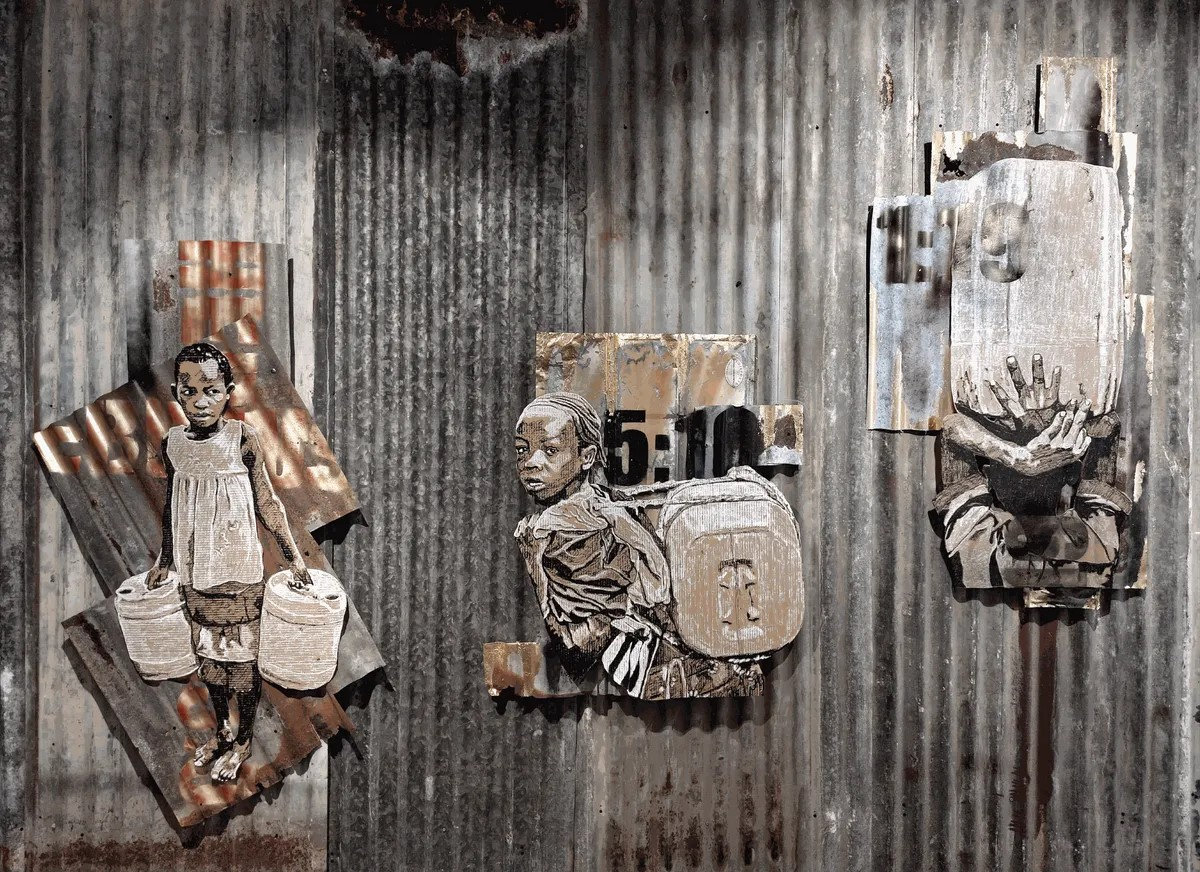
Cómo Ilídio Candja Candja transforma la vida en los barrios marginales de Angola en poderosas narrativas tribales multimedia.
Este cautivador tríptico de técnica mixta del artista angoleño Ilídio Candja Candja presenta una poderosa narrativa de la vida en los barrios marginales africanos a través de la cultura y el patrimonio. La obra, que representa a niños cargando recipientes de agua, está realizada sobre metal corrugado y cartón reciclados, lo que no solo refleja la resistencia de los materiales utilizados, sino que también evoca las tradiciones visuales del arte indígena angoleño. A través de esta pieza, Candja nos invita a explorar la profunda conexión entre las expresiones contemporáneas y las narrativas tribales que siguen dando forma a la vida de muchas personas en el sur de África.
¿Quién es Ilídio Candja Candja?
Ilídio Candja es una voz emergente en el arte africano contemporáneo, originario de Angola. Nacido en un país que ha experimentado una profunda transformación en la era poscolonial, su trayectoria artística ha evolucionado paralelamente al complejo panorama social y cultural de la sociedad angoleña. Candja utiliza técnicas mixtas para difuminar los límites entre lo tradicional y lo moderno, creando obras que resuenan con historias personales a la vez que abordan experiencias comunitarias más amplias. Su trabajo se nutre del rico patrimonio de la vida en los barrios marginales angoleños, explorando temas de identidad, memoria y resiliencia, y conectando con un público global deseoso de apreciar las narrativas africanas.
El arte tribal que lo cambió todo
En su exploración artística, Candja reconoce la cultura visual de los barrios marginales angoleños y se inspira en las tradiciones materiales de los pueblos Ovimbundu y Kimbundu. Estas culturas se caracterizan por su rica diversidad de prácticas, incluyendo el ingenioso uso de materiales cotidianos para crear arte, tanto funcional como ceremonial. Fue a través de su inmersión en estas prácticas comunitarias que Candja descubrió el potencial de los objetos desechados, lo cual, en última instancia, definiría su enfoque artístico. Su participación en exposiciones que promueven el arte tribal africano contemporáneo le ha permitido mostrar cómo estos métodos y estéticas tradicionales pueden fusionarse con expresiones artísticas modernas.
Leyendo la influencia en la obra
Al examinar detenidamente el tríptico, podemos discernir cómo la elección de materiales de Candja revela su profunda conexión con las influencias tribales. El uso de metal corrugado y cartón no solo evoca la arquitectura improvisada típica de los asentamientos informales del sur de África, sino que también refleja la capacidad de las comunidades indígenas para transformar lo cotidiano en arte. Las figuras monocromáticas de niños en tonos sepia resuenan con la reverencia a la conmemoración de los ancestros, estableciendo un paralelismo entre los retratos contemporáneos de Candja y las prácticas tradicionales.
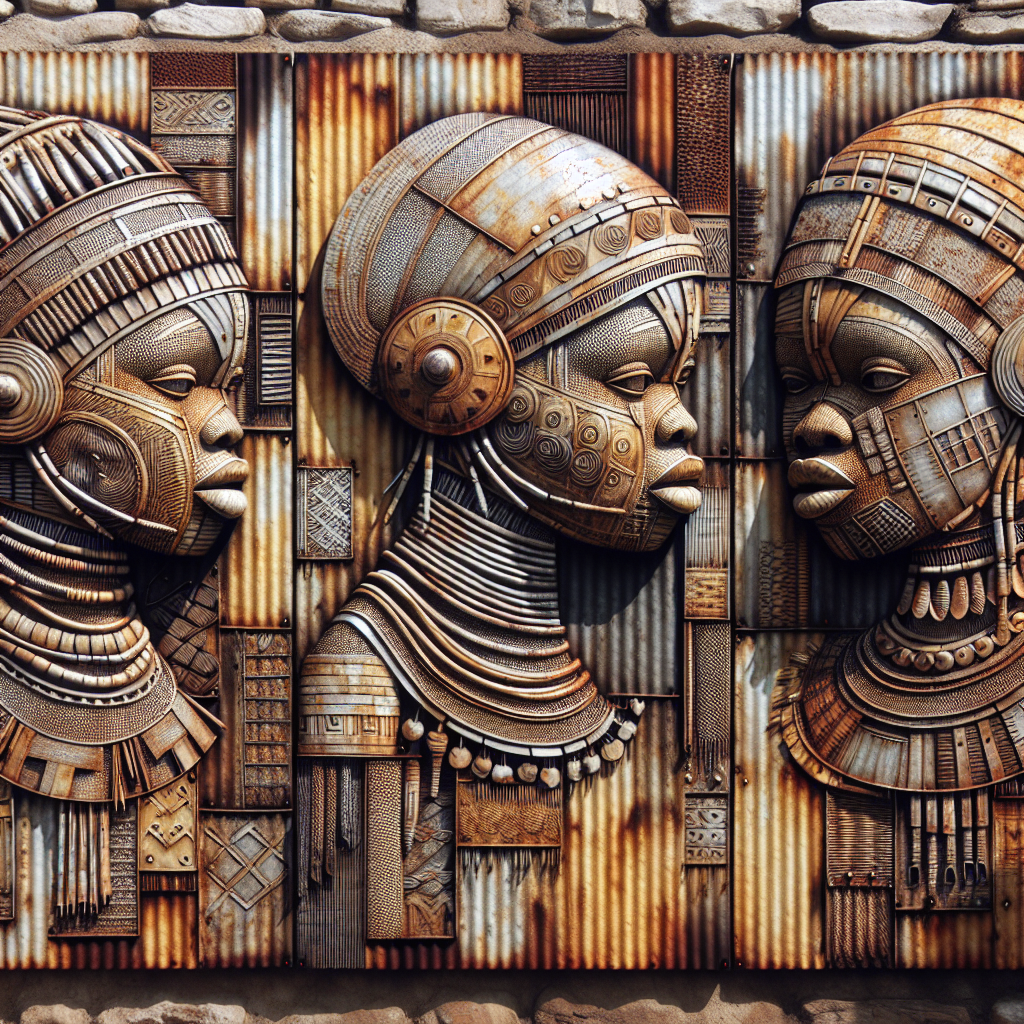
La técnica de ensamblaje por capas empleada en esta obra refleja las prácticas culturales de reutilización de materiales, un eco de cómo las comunidades indígenas crean objetos sagrados y significativos a partir de elementos desechados. Esta armonía entre forma y contenido ilustra un diálogo entre pasado y presente, resaltando la perdurable resonancia de las tradiciones tribales en un contexto contemporáneo.
“El arte no es solo un reflejo del mundo en que vivimos; es también un puente que conecta las historias de nuestros antepasados con la vida que llevamos hoy en día.’
Por qué esto importa
La obra de Ilídio Candja ejemplifica la importancia del intercambio cultural y el impacto de las influencias tribales en el arte contemporáneo. Al crear un diálogo visual que se nutre de contextos tanto tradicionales como modernos, Candja no solo honra el legado de su herencia cultural, sino que también fomenta una profunda comprensión de las experiencias vividas en los barrios marginales de Angola. Este tipo de apreciación intercultural es esencial para una historia del arte más inclusiva que reconozca y valore las diversas perspectivas, invitando al público a conectar con un arte que trasciende fronteras y habla de la humanidad compartida.
Libros y recursos que podrían gustarte
- Arte tribal
- Paul Gauguin: Un viaje a Tahití (Aventuras en el arte)
- El primitivismo en el arte moderno
Referencias y lecturas adicionales
Imagen cortesía de: Ilídio Candja Candja / www.sitges.cat — www.sitges.cat
Los enlaces de afiliados en este sitio web pueden generar una pequeña comisión sin costo adicional para usted. Este apoyo contribuye a mantener un proyecto dedicado a la belleza y la comprensión cultural del arte tribal.