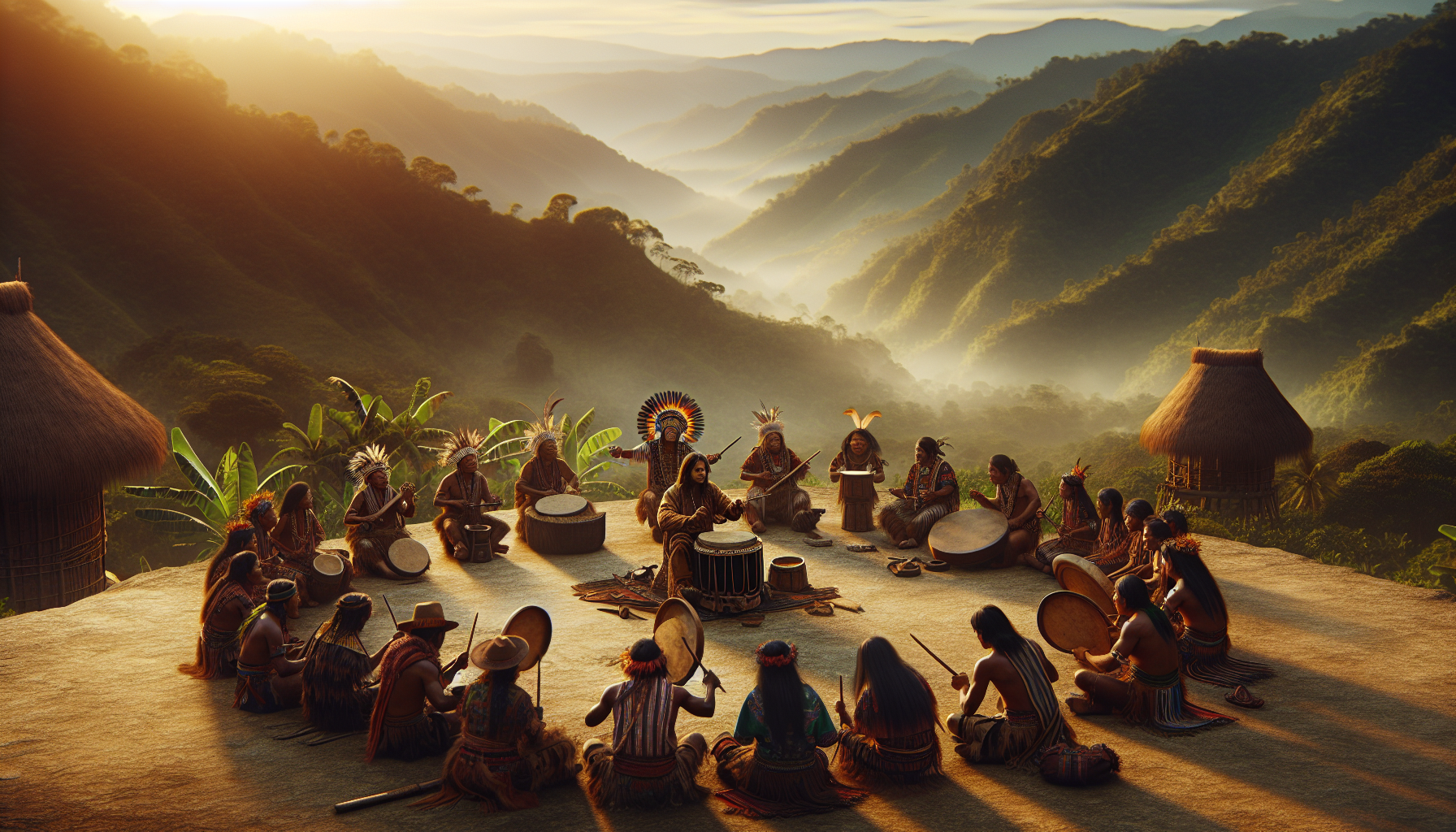
Música y danza tribal: El latido del corazón de las culturas indígenas
¿Alguna vez has sentido el pulso de un tambor recorrerte la espalda con un escalofrío? ¿O cómo el sonido de las flautas y los cantos te transporta a otro mundo? Las tradiciones musicales tribales no son solo sonidos; son la esencia misma de la vida para muchas culturas indígenas alrededor del mundo. Cada nota cuenta una historia, cada paso de baile encarna una tradición, y juntos crean vibrantes celebraciones de identidad, comunidad y espiritualidad. Ya sea que te encuentres en las animadas reuniones de las comunidades africanas o entre los ritmos de las tribus amazónicas, pronto descubrirás que la música es un lenguaje universal que trasciende barreras, atrayéndonos al corazón de las culturas indígenas.
El papel de la música en las culturas indígenas
En muchas tribus, la música constituye un vínculo vital que conecta a las personas con sus ancestros y su herencia. Está profundamente arraigada en su vida cotidiana y en sus eventos comunitarios, ya sean celebraciones, rituales o narraciones de cuentos. La música indígena, a menudo transmitida de generación en generación, es una tradición viva donde cada interpretación conlleva la historia y la sabiduría de la tribu. Los instrumentos elaborados con materiales naturales, como los tambores hechos con pieles de animales o las flautas talladas en madera, no son solo herramientas, sino objetos sagrados cargados de significado.
Consideremos, por ejemplo, al pueblo aborigen australiano, cuya música gira en torno al didgeridoo, un instrumento de viento que es a la vez encantador e inquietante. Se dice que sus tonos profundos y resonantes conectan al intérprete con la tierra, y cada interpretación está cargada de significado espiritual. Si sientes curiosidad por estas ricas tradiciones musicales tribales, explorando el Libro de tradiciones tribales del mundo puede proporcionar una visión aún más profunda de cómo la música desempeña un papel fundamental en las diferentes culturas indígenas.
Comprender la cultura de la danza tribal
Ahora que nos hemos adentrado en el fascinante mundo de la música tribal, centrémonos en la cultura de la danza tribal. En las sociedades indígenas, la danza es inseparable de la música; es la expresión física de los ritmos y melodías que resuenan a través de los siglos. Desde las vibrantes bailarinas de hula en Hawái hasta las intrincadas danzas de salto masái en África Oriental, cada movimiento cuenta una historia, que a menudo refleja la conexión de la tribu con la naturaleza, la espiritualidad y la comunidad.
En muchas culturas, las ceremonias de danza tienen lugar durante eventos importantes: nacimientos, bodas, cosechas o ritos de iniciación. Por ejemplo, las reuniones powwow de las tribus nativas americanas presentan danzas elaboradas que honran a los guerreros, celebran las estaciones y preservan las tradiciones. Estas reuniones no solo sirven como entretenimiento, sino que también refuerzan el orgullo y la unidad cultural. El rico tapiz de la cultura de la danza tribal se explora bellamente en grabaciones de la Colección de música tribal del mundo, mostrando estilos y ritmos únicos de todo el mundo.
Música y danza: una conexión sagrada
La interacción entre la música y la danza en las tradiciones tribales crea un espacio sagrado donde convergen expresiones de alegría, dolor y comunidad. Cada ritmo y cada paso reflejan la singular relación que los pueblos tribales tienen con su entorno. La música se convierte en una forma de narración que captura el espíritu de la tierra, la historia de la tribu y el ciclo continuo de la vida. Al moverse al ritmo de las melodías, los bailarines recorren simbólicamente sus senderos ancestrales y mantienen vivas tradiciones milenarias.
En algunas culturas, el canto vocal constituye una parte importante de las tradiciones musicales tribales. Por ejemplo, el canto gutural inuit no es solo una actuación; es un desafío lúdico entre dos mujeres que refleja los sonidos de la naturaleza, mostrando la profunda conexión de este pueblo con su tierra. Conectar con la música tribal nos ayuda a apreciar no solo el arte en sí, sino también las intenciones que lo inspiran. Al experimentarlo en un festival o a través de una actuación, comprenderás por qué estas tradiciones cautivan tanto a participantes como a espectadores.
Explorando el mundo de la música étnica
Viajar y sumergirse en el mundo de la música étnica ofrece una perspectiva enriquecedora sobre la diversidad cultural. Considere un viaje a Bali, donde las orquestas de gamelán crean paisajes sonoros cautivadores que acompañan sus danzas tradicionales. La fusión de instrumentos de percusión y melodías intrincadas captura la expresión artística y la identidad cultural de la región de una manera inolvidable. Es fascinante cómo cada destino añade una nueva dimensión a nuestra comprensión de la música y la danza como expresiones de vida.
A medida que profundices en estas tradiciones musicales, descubrirás de primera mano cómo la música y la danza tribales abren las puertas a la comprensión de las complejas narrativas y creencias espirituales de diferentes pueblos. Ya sea una reunión en la plaza de un pueblo o un festival dedicado a las artes, serás testigo del extraordinario poder que la música y la danza tienen para unir a las personas y preservar las culturas.
Reflexiones finales
Las tradiciones musicales tribales y la danza que las acompaña son mucho más que mero entretenimiento; son expresiones vitales de historia, identidad y comunidad. Estas formas de arte honran el pasado a la vez que crean espacios para la interpretación moderna dentro de las culturas indígenas. Al participar en talleres, asistir a festivales o simplemente escuchar música indígena, no solo enriqueces tus propias experiencias de vida, sino que también contribuyes a la preservación de estas importantes tradiciones.
Si te sientes inspirado y quieres profundizar en este fascinante mundo, considera explorar productos como el Libro de tradiciones tribales del mundo o disfruta de los impresionantes sonidos que se encuentran en el Colección de música tribal del mundo. Cada entrega es un cofre del tesoro repleto de conocimientos culturales que pueden ampliar tu apreciación por el hermoso tapiz de la música y la danza tribales de todo el mundo.
Los enlaces de afiliados en este sitio web pueden generar una pequeña comisión sin costo adicional para usted. Este apoyo contribuye a mantener un proyecto dedicado a la belleza y la comprensión cultural del arte tribal.