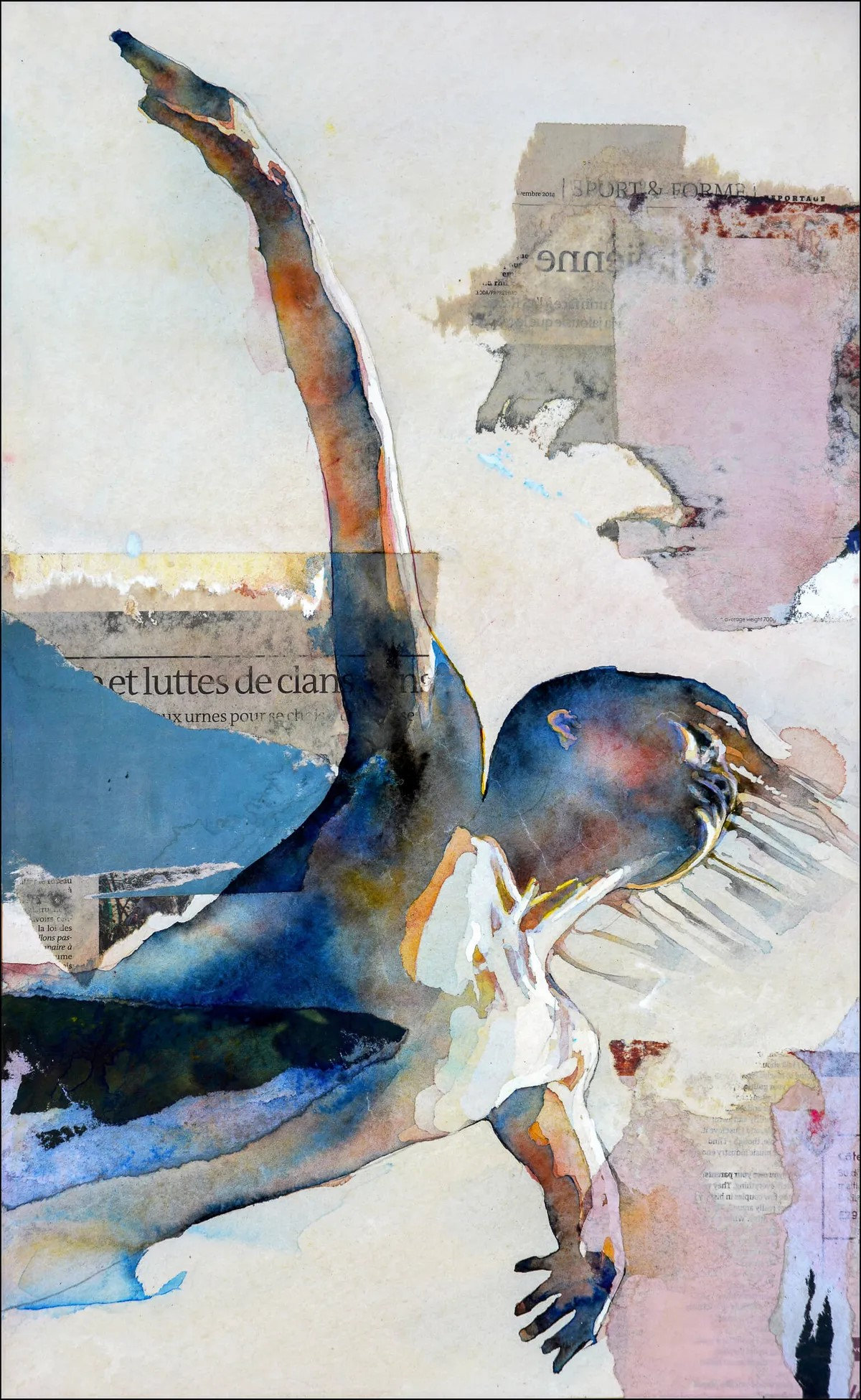
La acuarela se fusiona con las técnicas del arte corporal tribal.
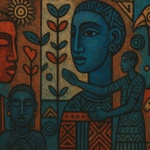
El uso innovador que Bruce Clarke hace de la acuarela y el collage puede parecer claramente moderno, pero está profundamente entrelazado con las antiguas tradiciones de la pintura corporal sudafricana. Esta inesperada fusión desafía nuestra percepción del arte contemporáneo y nos invita a reconsiderar las raíces de la creatividad en contextos tribales. Al utilizar medios modernos en el arte tribal, Clarke no solo revitaliza estas estéticas tradicionales, sino que también resalta la resiliencia de la expresión cultural frente a la disrupción colonial.
Reviviendo tradiciones mediante técnicas modernas
La obra de Clarke ejemplifica cómo los artistas contemporáneos pueden inspirarse en su herencia cultural al tiempo que emplean técnicas modernas. La delicada superposición de capas de acuarela, combinada con la profundidad táctil del collage, refleja los métodos tradicionales de pintura corporal, que a menudo utilizaban pigmentos naturales y diseños intrincados para transmitir identidad y estatus. En este sentido, Clarke actúa como un puente, conectando el pasado con el presente y demostrando cómo los medios modernos en el arte tribal pueden revitalizar prácticas ancestrales.
Además, el enfoque de Clarke fomenta el diálogo entre diferentes narrativas artísticas. Sus obras pueden interpretarse como una reflexión sobre la evolución de la identidad en Sudáfrica, donde la historia colonial a menudo ha eclipsado las voces indígenas. Al adoptar técnicas modernas, permite que estas voces resurjan, demostrando la vigencia de la estética tradicional y reivindicando su lugar en el discurso contemporáneo.
“Al fusionar el lenguaje visual del arte corporal tribal con medios modernos, pretendo resaltar la continuidad de la expresión cultural, revelando cómo el arte perdura a pesar de los desafíos históricos.”
La relevancia actual de la expresión cultural
Este diálogo no solo beneficia a Clarke; resuena en un público más amplio al destacar la importancia de las narrativas culturales en el panorama artístico actual. A medida que crece el interés global por el arte indígena, artistas como Clarke nos recuerdan que la reinterpretación de técnicas tradicionales a través de medios modernos puede ofrecer nuevas perspectivas y conocimientos. Esta relevancia constante sugiere que la cultura no es estática, sino que evoluciona continuamente, fomentando la resiliencia y la adaptación.
¿Quieres profundizar en este tema? Lee nuestro artículo completo: Cómo las raíces sudafricanas de Bruce Clarke transforman el arte contemporáneo a través de la memoria y la identidad tribales.
Qué significa esto para ti
Contemplar obras de arte que fusionan técnicas modernas con el arte tribal nos invita a reflexionar sobre nuestras propias identidades culturales y las narrativas que las conforman. La obra de Clarke nos recuerda el poder del arte para conectarnos a través del tiempo y el espacio, invitándonos a celebrar la resiliencia y la continuidad de la expresión cultural.
Publicaciones relacionadas:
 Cómo las raíces sudafricanas de Bruce Clarke transforman el arte contemporáneo a través de la memoria y la identidad tribales.
 Cómo las raíces sudafricanas de Bruce Clarke transforman el arte contemporáneo a través de la memoria y la identidad tribales.
 Simbolismo del color: Más de lo que parece a simple vista