Cascos y tocados nupciales tradicionales kazajos: símbolos de la herencia de Asia Central.
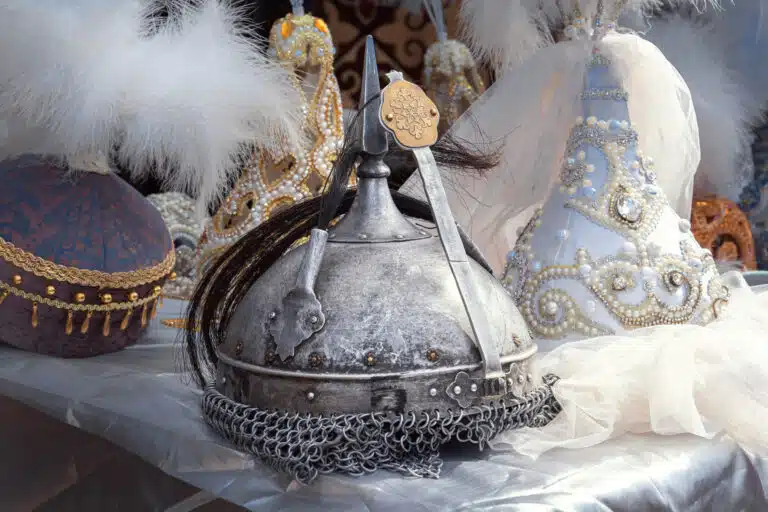
La impactante imagen que tenemos ante nosotros presenta una fascinante colección de tocados tradicionales de Asia Central. Destaca un robusto casco de guerrero de metal, con su protector de cuello de malla metálica y un imponente penacho de crin de caballo, que evoca imágenes de valientes guerreros nómadas que recorren la vasta estepa euroasiática. Junto a este formidable tocado se encuentra el elegante saukele kazajo, un tocado nupcial que deslumbra con perlas, intrincados bordados y delicadas plumas blancas. Estos objetos ceremoniales resuenan profundamente con la rica historia e identidad cultural del pueblo kazajo, iluminando tanto las tradiciones marciales como matrimoniales que han moldeado su estilo de vida nómada a lo largo de los siglos.
Acerca de esta cultura y su arte
El pueblo kazajo, originario de Asia Central, desciende de las antiguas tribus nómadas que recorrían la extensa estepa. Presentes en los territorios del actual Kazajistán, partes de China, Rusia y Mongolia, estos pastores nómadas poseen una rica cultura marcada por tradiciones ecuestres, la vida pastoril y una vibrante expresión artística. Como guardianes de la tradición oral, los kazajos comparten relatos que a menudo enfatizan el vínculo entre la naturaleza y el individuo, un hilo conductor intrínsecamente ligado a su arte y artesanía.
Las tradiciones artísticas de esta cultura son diversas, abarcando desde la carpintería hasta las artes textiles, reflejando cada una la relación intrínseca entre la identidad kazaja y su entorno. Entre ellas, la artesanía en metal y los textiles destaca especialmente. Los tocados que vemos aquí son emblemáticos tanto de la destreza marcial como de las arraigadas costumbres que rodean el matrimonio, subrayando la dualidad de la vida kazaja.
Comprender esta pieza
El casco de guerrero, una maravilla de la metalurgia, no es solo un elemento de protección, sino también un símbolo de valor y herencia. A lo largo de la historia, ha servido como distintivo del estatus de un hombre dentro de su tribu y de su disposición para defender a su pueblo. Lucir tal pieza durante las celebraciones infundía orgullo y respeto entre los compañeros, poniendo de manifiesto la maestría y el valor propios de los guerreros kazajos.
En marcado contraste, el tocado nupcial saukele encarna la feminidad y la belleza, sirviendo como un poderoso símbolo de la transición a la edad adulta. Esta intrincada pieza tiene sus raíces en la tradición, y su diseño suele variar según los estilos regionales y los estratos sociales. Para las novias kazajas, lucir el saukele es un honor, un rito que celebra no solo la unión matrimonial, sino también la continuidad del legado cultural.
Simbolismo y artesanía
Cada detalle de estos tocados está cargado de un profundo simbolismo. El casco guerrero suele presentar motivos que representan fuerza y protección. El uso del metal no solo proporciona durabilidad, sino que también puede simbolizar la conexión entre la tierra y el cielo, un tema importante en muchas culturas nómadas. El penacho decorativo de crin de caballo no solo sirve como adorno, sino también como gesto de respeto hacia los caballos, seres venerados en la vida kazaja.
En contraste, el saukele suele estar adornado con una gran variedad de ornamentos. Las perlas simbolizan la pureza, mientras que los elaborados bordados narran historias transmitidas de generación en generación. El uso de plumas blancas puede simbolizar la aspiración a lo divino, un elemento de pureza y receptividad en la unión matrimonial. La maestría artesanal refleja un alto nivel de habilidad perfeccionado a lo largo de generaciones, lo que ilustra la importancia de la preservación cultural en un mundo en constante evolución.
Objetos culturales como estos nos recuerdan las historias y los espíritus que atraviesan el tiempo, trascendiendo las fronteras geográficas y las circunstancias.
Por qué es importante hoy
En el panorama actual, la importancia de los cascos y tocados nupciales tradicionales kazajos es multifacética. A medida que la globalización transforma las culturas en todo el mundo, la preservación de estas piezas únicas se ha convertido en un acto fundamental de patrimonio cultural e identidad. No solo representan un motivo de orgullo nacional para el pueblo kazajo, sino que también constituyen vínculos vitales con su historia común. Además, el arte plasmado en estas piezas refleja una experiencia humana universal: la expresión creativa de la identidad y el sentido de pertenencia.
Tanto los coleccionistas de arte como los amantes de la cultura han reconocido la importancia de la artesanía kazaja para enriquecer el panorama artístico mundial. Al exhibir estas piezas en museos y galerías, las historias que encierran pueden llegar a un público más amplio, invitando a la participación y la apreciación de quienes no comparten el mismo origen cultural. El atractivo estético y la importancia histórica de estas piezas sirven de puente, ofreciendo una visión de una rica cultura moldeada por los vastos paisajes de Asia Central.
Como custodios de la cultura, tenemos el privilegio —y la responsabilidad— de honrar y celebrar el arte y el patrimonio representados en estos tocados ceremoniales.
Reflexiones finales
Reflexionar sobre la fascinante historia que se esconde tras los cascos y tocados nupciales tradicionales kazajos fomenta una mayor apreciación de la complejidad de la identidad cultural. Cada pieza representa más que un simple objeto; es un capítulo de la historia humana, un hilo conductor en la narrativa colectiva de un pueblo cuyas vidas están marcadas por los antiguos ritmos de la estepa. Al explorar las tradiciones y la artesanía kazajas, considere el papel que desempeñan estas bellas obras de arte en el fomento de conexiones entre diversas culturas y épocas.
Libros y recursos que podrían gustarte
- Obras maestras del arte primitivo
- Arte tribal
- Arte Oceánico (Mundo del Arte)
- Entre el arte y la antropología (Práctica etnográfica contemporánea)
Referencias y lecturas adicionales
Imagen cortesía de: museumstudiesabroad.org — estudiosmuseosenelextranjero.org
Los enlaces de afiliados en este sitio web pueden generar una pequeña comisión sin costo adicional para usted. Este apoyo contribuye a mantener un proyecto dedicado a la belleza y la comprensión cultural del arte tribal.