
Traditional Kazakh Helmets and Bridal Headpieces: Symbols of Central Asian Heritage
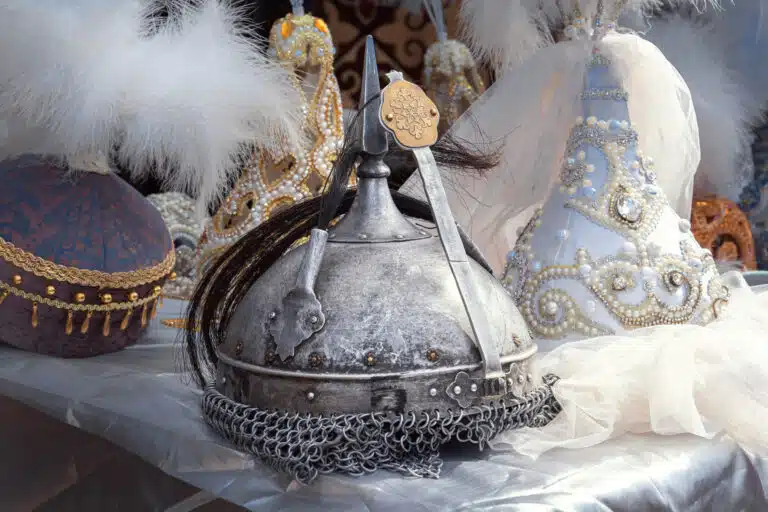
The striking image before us presents a fascinating array of traditional Central Asian headpieces. Dominating the scene is a sturdy metal warrior helmet, complete with a chainmail neck guard and an imposing horsehair plume, evoking images of gallant nomadic warriors traversing the vast Eurasian steppe. Beside this formidable headgear lies the elegant Kazakh saukele, a bridal headdress that dazzles with pearls, intricate embroidery, and delicate white feathers. These ceremonial objects resonate deeply with the rich history and cultural identity of the Kazakh people, illuminating both martial and matrimonial traditions that have shaped their nomadic lifestyle through the centuries.
About This Culture and Its Art
The Kazakh people, hailing from Central Asia, are descendants of the ancient nomadic tribes that roamed the expansive steppe region. Spanning the territories of modern-day Kazakhstan, parts of China, Russia, and Mongolia, these nomadic herders have a storied culture marked by traditions of horsemanship, pastoral life, and vibrant artistic expression. As keepers of an oral tradition, Kazakhs share tales that often emphasize the bond between nature and the individual, a thread that is intricately woven into their art and crafts.
Artistic traditions in this culture are diverse, with crafts ranging from woodworking to textile arts, each reflecting the innate relationship between the Kazakh identity and their environment. Among these, the craftsmanship of metalwork and textiles shines particularly bright. The headpieces we see here are emblematic of both the martial prowess and the deep-rooted customs surrounding marriage, underscoring the duality of Kazakh life.
Understanding This Piece
The warrior helmet, a marvel of metalwork, is not just protective equipment but a symbol of valor and heritage. Throughout history, it has served as a mark of a man’s status within his tribe and his readiness to defend his people. Wearing such a piece during celebrations would evoke pride and respect among peers, showcasing the craftsmanship and valor synonymous with Kazakh warriors.
In stark contrast, the saukele bridal headdress embodies femininity and beauty, serving as a potent symbol of the transition into womanhood. This intricate piece has its roots in tradition, with its design often varying based on regional styles and societal ranks. For Kazakh brides, donning the saukele is an honor, a rite that celebrates not only marital union but also the continuity of cultural legacy.
Symbolism and Craft
Every aspect of these headpieces carries profound symbolism. The warrior helmet often features motifs that represent strength and protection. The use of metal not only provides durability but can also signify the connection between the earth and the sky—an important theme in many nomadic cultures. The decorative horsehair plume serves not just as an ornament but also as a gesture of respect to the horses, revered beings in Kazakh life.
In contrast, the saukele is frequently adorned with an array of embellishments. Pearls signify purity, while elaborate embroidery tells stories passed down through generations. The use of white feathers can symbolize the aspiration towards the divine, an element of purity and receptiveness in the union of marriage. The overall craftsmanship reflects a high level of skill that has been honed over generations, illustrating the importance of cultural preservation in an ever-evolving world.
Cultural artifacts like these remind us of the stories and spirits that traverse time, transcending the boundaries of geography and circumstance.
Why It Matters Today
In the contemporary landscape, the significance of traditional Kazakh helmets and bridal headpieces is multifaceted. As globalization reshapes cultures worldwide, preserving these unique artifacts has become an important act of cultural heritage and identity. They serve not only as points of national pride for the Kazakh people but also as vital links to their common history. Furthermore, the artistry embodied in these pieces speaks to a universal human experience—the creative expression of identity and belonging.
Art collectors and cultural enthusiasts alike have recognized the importance of Kazakh craftsmanship in enriching the global tapestry of artistic traditions. By showcasing these artifacts in museums and galleries, the stories they carry can reach broader audiences, inviting engagement and appreciation from those who may not share the same background. The aesthetic appeal and historical significance of these pieces serve as a bridge, offering insights into a rich culture shaped by the vast landscapes of Central Asia.
As cultural stewards, we have the privilege—and responsibility—to honor and celebrate the artistry and heritage represented in these ceremonial headpieces.
Final Thoughts
Reflecting on the captivating story behind traditional Kazakh helmets and bridal headpieces fosters a deeper appreciation for the complexities of cultural identity. Each piece represents more than just an artifact; it is a chapter of human history, a vital thread in the collective narrative of a people whose lives are shaped by the ancient rhythms of the steppe. As you explore more about Kazakh traditions and craftsmanship, consider the role these beautiful works of art play in fostering connections across diverse cultures and eras.
Books & Resources You Might Enjoy
- Masterpieces of Primitive Art
- Tribal Art
- Oceanic Art (World of Art)
- Between Art and Anthropology (Contemporary Ethnographic Practice)
References & Further Reading
Image courtesy of: museumstudiesabroad.org — museumstudiesabroad.org
Affiliate links on this website may generate a small commission at no extra cost to you. This support helps sustain a project dedicated to the beauty and cultural understanding of tribal art.