Inuit Throat Singing: Nature’s Playful Duel
Inuit throat singing is far more than a captivating auditory experience; it serves as a competitive duel between women that intricately weaves together community, nature, and storytelling. This unique form of musical expression, characterized by its playful yet intense nature, reflects the deep-rooted connections the Inuit have with their surroundings and one another. Through the art of throat singing, participants mimic the sounds of the Arctic, echoing the calls of animals and the whispers of the wind, all while engaging in a spirited competition.
The Playful Spirit of Competition
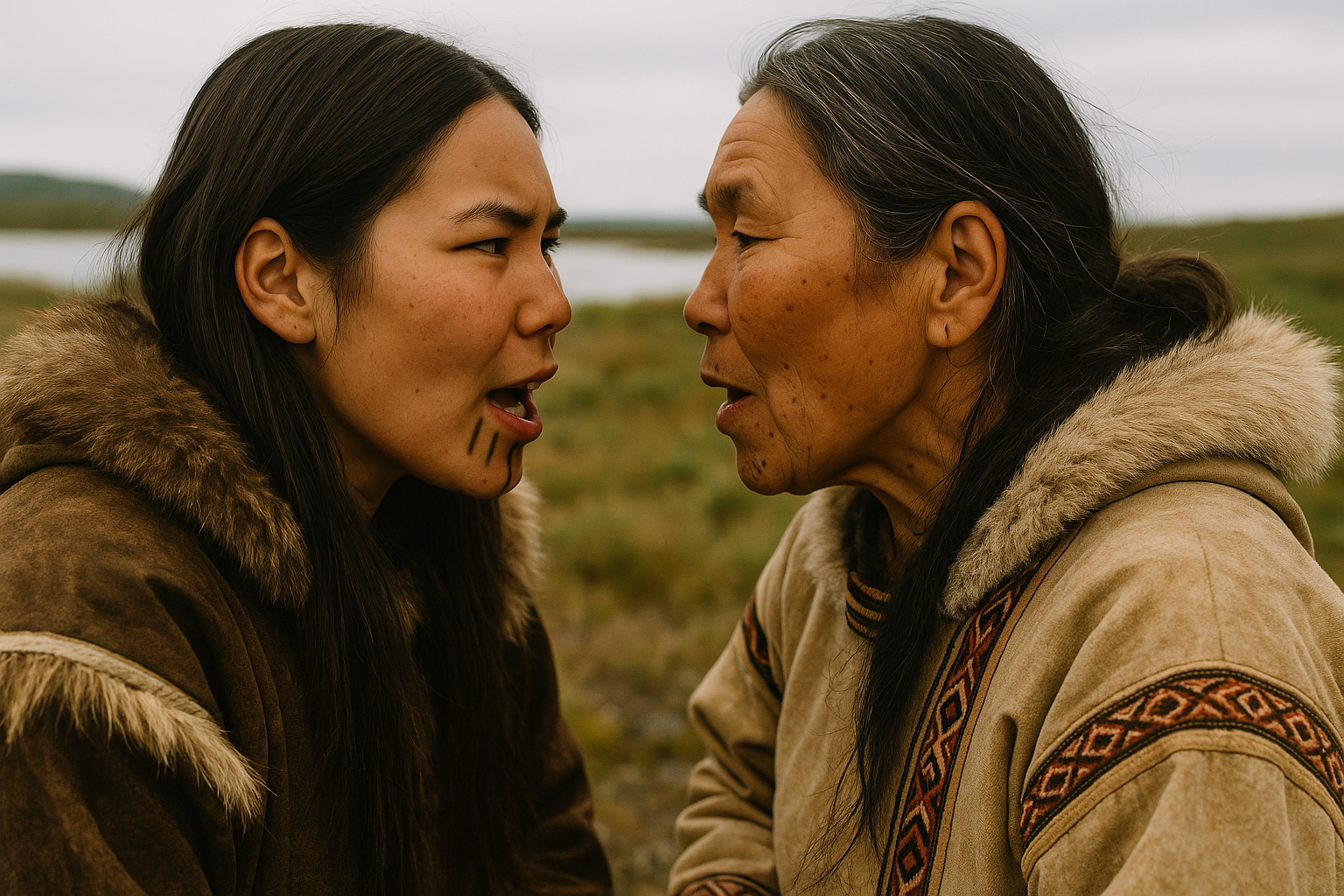
Inuit throat singing competitions often unfold as a lively and engaging spectacle, where two women face each other, their mouths forming intricate patterns as they produce layered sounds. Unlike typical musical performances that emphasize individual talent, these competitions prioritize social interaction and camaraderie. The interplay of voices creates a rhythmic tapestry that is both enchanting and challenging, with each participant striving to outdo the other while maintaining a spirit of fun. The laughter and excitement that fill the air during these competitions highlight the importance of collective experience in Inuit culture.
“Inuit throat singing is not merely an art form; it is a celebration of community and the natural world, where the sounds of nature become the backdrop for friendly competition.”
The sounds produced during these competitions often mimic elements of the landscape—from the howling wind to the calls of wildlife—demonstrating the Inuit’s profound connection to their environment. This reflection of nature is not accidental; it serves as a reminder of the Inuit’s reliance on the land and its creatures for survival. The playful competition of throat singing thus becomes a vehicle for storytelling, transmitting cultural narratives and social values through melody and mimicry.
The Role of Community in Cultural Preservation
As Inuit throat singing flourishes within the community, it also plays a crucial role in preserving language, traditions, and social bonds. The competition allows for the transmission of skills and knowledge from one generation to the next, ensuring that young Inuit women learn not only the art of throat singing but also the cultural significance that accompanies it. In this way, the practice becomes a living archive of Inuit history, connecting past and present while fostering a sense of identity among participants.
Want to explore this further? Read our full article: Tribal Music and Dance: The Heartbeat of Indigenous Cultures
The Bigger Picture
Inuit throat singing competitions encapsulate the essence of community and cultural continuity in a unique and engaging manner. As women gather to challenge one another, they also celebrate their heritage, intertwining nature’s sounds with the rich tapestry of Inuit storytelling and communal life.