
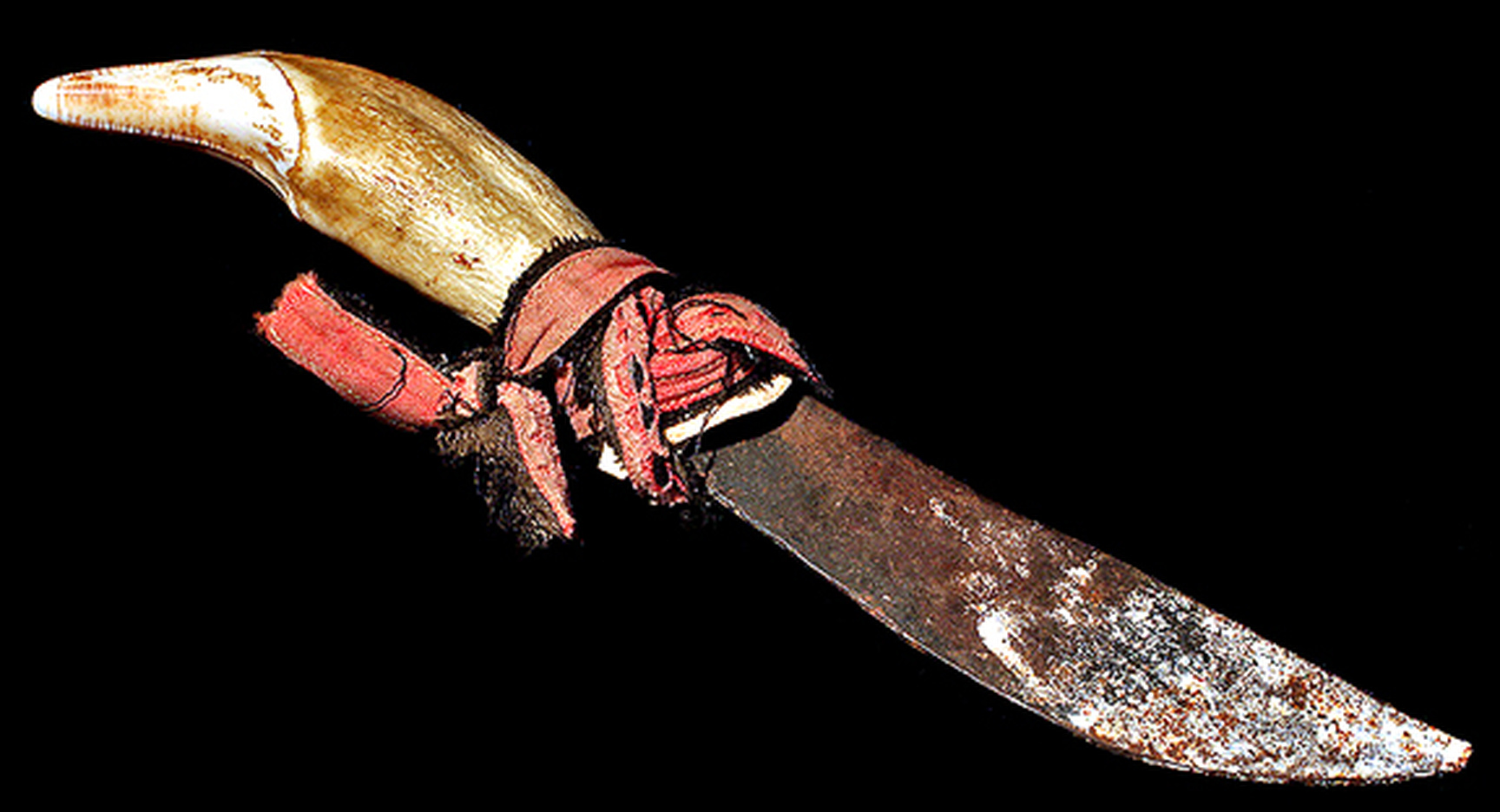
Ifugao Bear Tooth Knife: Traditional Filipino Hunting Weapon with Bone Handle
In the heart of the Philippine highlands, a beautifully crafted Ifugao hunting knife captures both the eye and the imagination. This traditional weapon features a striking curved handle made from bear or boar tooth, uniquely connected to a robust forged iron blade. Leather bindings skillfully join organic materials with metal, showcasing the artistry of the Ifugao people — an indigenous group renowned for their rich cultural heritage and mastery of craftsmanship. As you observe this knife, you might feel inspired by the stories it bears, whispering of generations of hunting, food preparation, and the deep connection between the Ifugao people and their lush mountainous environment.
About This Culture and Its Art
The Ifugao people reside in the mesmerizing Cordillera region of the Philippines, known for its terraced rice fields that cling to steep hillsides and for its diverse ethnic traditions. This culture is not merely a remnant of the past but a vibrant living tradition characterized by the harmonious relationship between the Ifugao and their environment. The Ifugao are renowned for their intricate rice terraces, which are considered a UNESCO World Heritage site, reflecting their ingenuity in agriculture and environmental stewardship.
Art and craftsmanship play pivotal roles in Ifugao society, manifesting through wood carvings, textiles, and metalwork, each with functional and ceremonial significance. Tools and weapons, such as the Ifugao hunting knife, are not often seen as just utilitarian objects but are imbued with cultural narratives, family lineage, and historical pride.
Understanding This Piece
This Ifugao hunting knife, with its distinctive bear or boar tooth handle, carries profound meaning within its cultural context. Traditionally, such knives weren’t merely weapons; they were essential tools utilized in everyday life, reflecting the community’s reliance on hunting for sustenance and survival. When you grasp this knife, you can almost envision the skilled hands that wielded it, harvesting both game and plants from the rugged terrain of the highlands.
The use of natural materials emphasizes the symbiotic connection the Ifugao people have with their environment. The knife represents not only functionality but also craftsmanship, as it is often passed down from generation to generation, preserving both the skill and the heritage of the Ifugao people. Each scratch and mark on the blade narrates a history intertwined with local customs and collective identity.
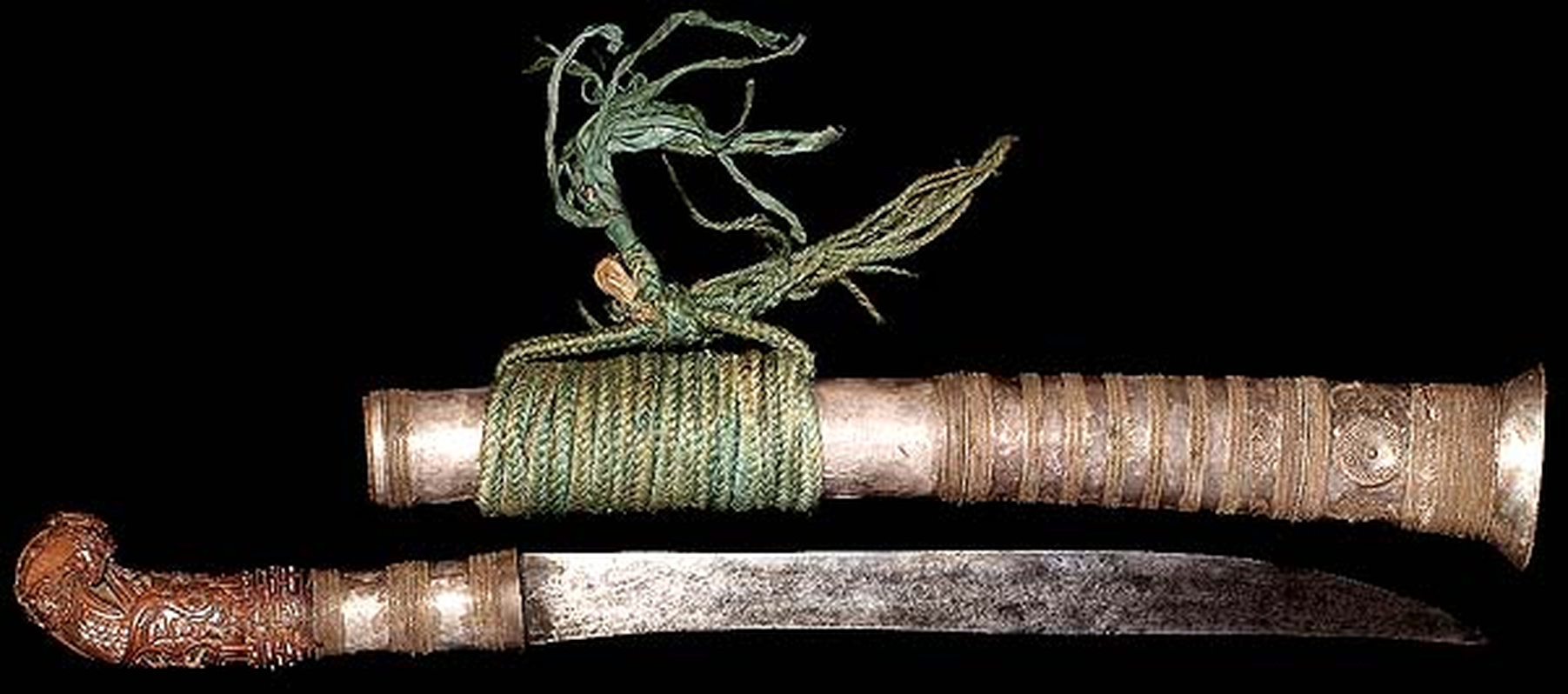
Symbolism and Craft
The materials and techniques used to create this knife reflect the core principles of Ifugao artistry. The bear or boar tooth handle serves both a practical and symbolic purpose, grounding the knife with the spirit of the animals that inhabit the region. Using such organic materials fosters a deep respect for nature, weaving an integral connection into the fabric of Ifugao belief systems.
The forged iron blade represents the technological adaptation of the Ifugao. It enables them to enhance their hunting capabilities while highlighting their skills in metallurgy, an art that has been cultivated through centuries of knowledge passed down amongst the community. The leather wrappings are not only functional but also serve to signify the craftsmanship that defines this ethnic group’s aesthetics.
“In every curve of the knife lies a story of survival, identity, and the enduring connection to nature.”
Symbolically, the knife is often a representation of strength and resilience, key virtues in Ifugao culture. Often featured in rituals or as a component of a warrior’s regalia, it holds a status that transcends its physical use — it embodies the spirit of the Ifugao people, reflecting their historical struggle, achievements, and enduring heritage.
Why It Matters Today
The relevance of the Ifugao hunting knife extends far beyond its original utilitarian purpose, reflecting a vital aspect of cultural preservation in today’s globalized world. In an age where often traditional practices face pressures of modernization, the appreciation of such artifacts encourages a dialogue about cultural identity and heritage. Collectors, museums, and cultural enthusiasts alike are recognizing and advocating for the value of indigenous crafts, not merely as objects of art but as vessels of historical significance and cultural narratives.
Moreover, the Ifugao knife serves as a reminder of the rich, diverse cultures that inhabit our world, emphasizing the importance of preserving these traditions for future generations. As cultures converge in a shared global space, understanding and valuing the uniqueness of tribal art fosters mutual respect and appreciation. The Ifugao knife, therefore, constitutes not just a tool but a collaborative bridge inviting you to explore, respect, and celebrate the wealth of human creativity.
“In the legacy of this knife lies a message: to honor the past is to empower the future.”
What This Means for You
Engaging with traditional artifacts like the Ifugao hunting knife enriches your understanding of global cultures. It allows you to appreciate the intricacies of craftsmanship, the stories of resilience, and the beauty of connecting with nature that different societies embody. As you explore the depth of such cultural artifacts, you are also encouraged to reflect on your own relationship with craft, art, and identity. The journey into the world of tribal art not only unveils the greatness of human creativity but also beckons you to contribute positively to the legacy of diversity in artistic expression.
Books & Resources You Might Enjoy
- Masterpieces of Primitive Art
- Tribal Art
- Oceanic Art (World of Art)
- Between Art and Anthropology (Contemporary Ethnographic Practice)
References & Further Reading
Image courtesy of: www.tribalartasia.com — www.tribalartasia.com
Affiliate links on this website may generate a small commission at no extra cost to you. This support helps sustain a project dedicated to the beauty and cultural understanding of tribal art.